Rapid Plumbing Ipswich connects Ipswich and the Ipswich region property owners with qualified, connects Ipswich property owners with licensed local plumbers for tempering valve. Tell us your suburb and what is happening and we will pass it to a licensed plumber who covers your area. Firm price from them after they have seen it.
What it actually is
Your hot water system stores water at 60 degrees or hotter. It has to: below that, Legionella bacteria can grow in the tank.
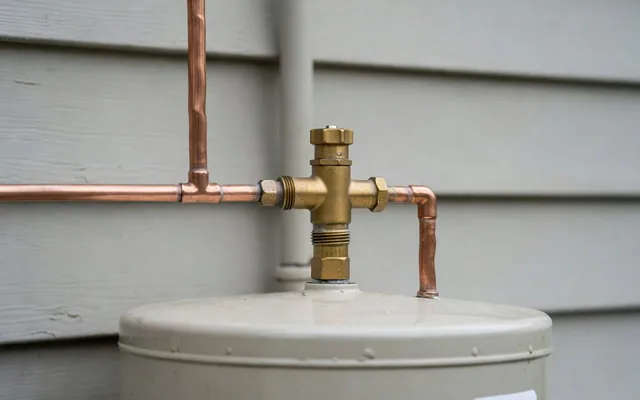
But 60 degree water scalds. So a small brass valve sits on the outlet and blends cold water back in, so what arrives at your tap is around 50 degrees. That valve is the tempering valve. It is usually mounted within a metre of the system, and on most installations you can see it — a brass body with a hot inlet, a cold inlet and one outlet.
It is doing this every time anyone in the house turns on a hot tap, which is why it is a wear item rather than a fit-and-forget one.
Queensland requires one
Business Queensland puts it plainly: a temperature control device must be fitted to all new and replacement hot water systems, delivering a maximum of 50 degrees to the taps, while the system itself stores at a minimum of 60 degrees to suppress Legionella.
The practical consequence catches people out. If you replace a hot water system on an older house that never had one, the new installation needs a tempering valve fitted as part of the job. It is not an upsell — a licensed plumber cannot legally leave it off.
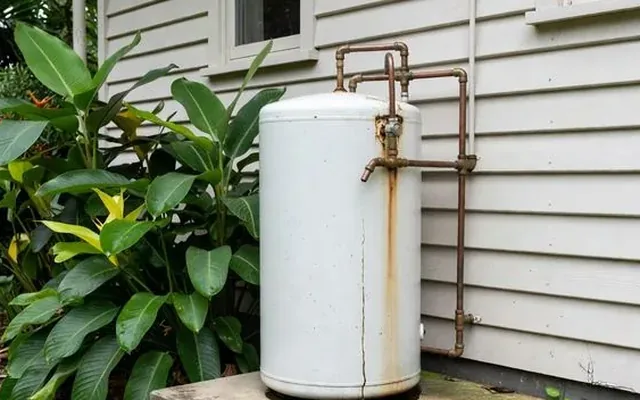
It also means the age of your house is a decent guide to whether you have one at all. Plenty of older Ipswich homes still on their original system do not.
How to tell it is the valve and not the system
The symptom pattern is specific, and it is worth knowing before someone quotes you for a new system.
Scalding hot water at every tap means the valve has failed open or is stuck, so you are getting storage temperature straight out. This is the one to treat as urgent — 60 degree water burns a child in about a second.
Lukewarm water everywhere, with the system otherwise fine, is the opposite fault. The valve is letting too much cold through. People replace entire hot water systems over this. The tank is often perfectly healthy.
The tell either way is that it affects every hot tap in the house at once. A single tap running cold is that tap or that run of pipe. The whole house changing together points upstream, at the valve or the system — and the valve is both the cheaper and the more likely of the two.
They are replaced, not repaired
The temperature-sensing element inside is not a serviceable part, so a failed valve is swapped rather than rebuilt. AS/NZS 4032.3 is the standard that covers them, and the interval the trade works to is replacement at no more than five years.
Most households have never had theirs touched. If your system is over five years old and nobody has been near the valve, it is a fair thing to ask about at the next service rather than waiting for it to fail.
On cost: this sits in the repair band on our price guide rather than the replacement band, and the valve itself is a small part of it. Ask for the valve to be quoted separately from the labour so you can see which is which.
What to do right now if the water is scalding
Turn the hot taps off and keep children away from them. If you can reach the system safely, turning it off at the isolation valve or the breaker will stop it reheating, and the tank will cool over some hours.
Do not try to adjust the valve yourself. The adjustment is under a cap and setting it by feel is exactly how someone ends up with 60 degree water again. Tempering valve work is licensed plumbing work in Queensland and it is reportable to the QBCC.